AI Engineer World Fair Highlights Harness Engineering Trends
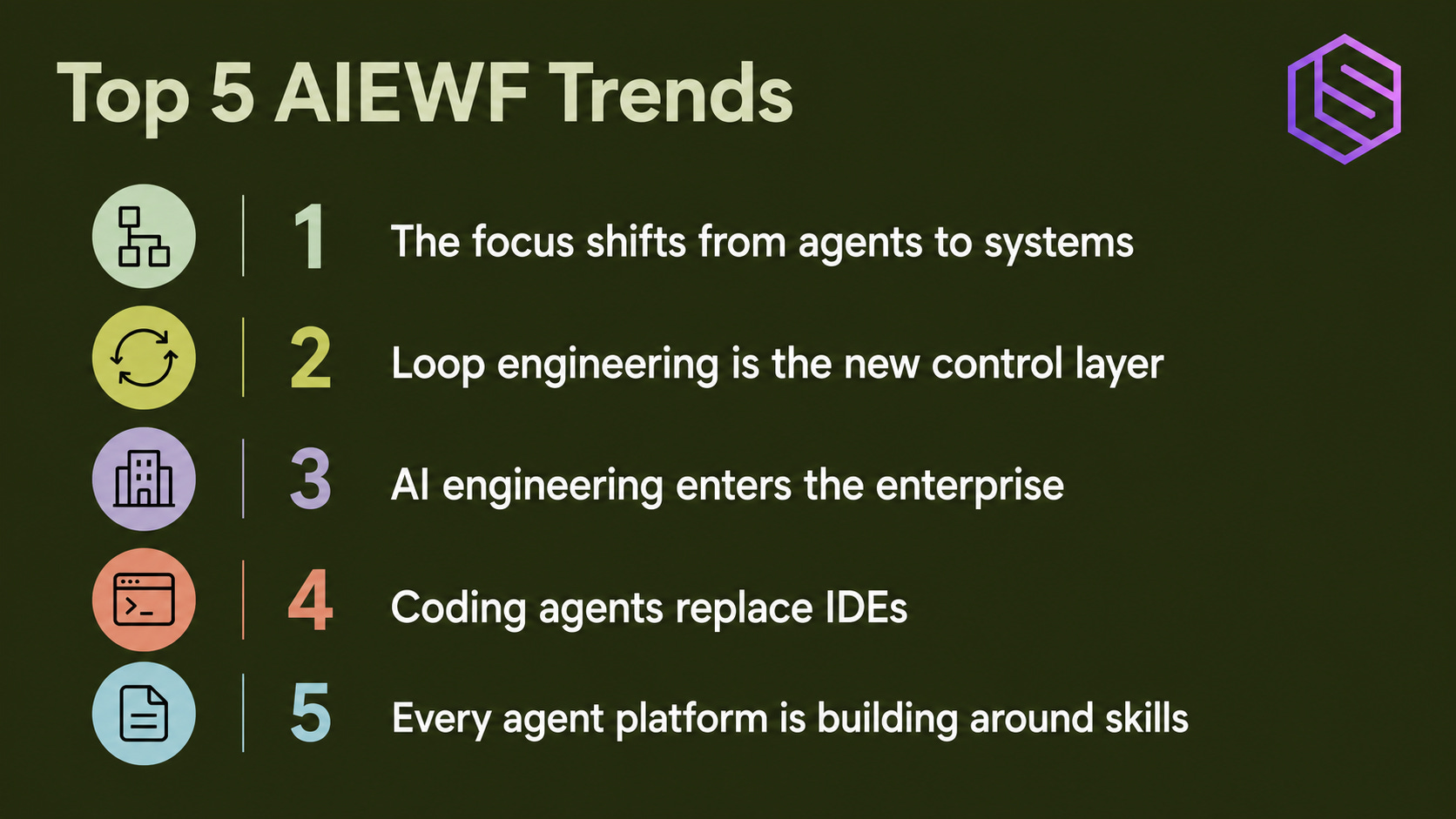
Inspect the new harness design patterns and update your agent orchestration to include evaluation and monitoring hooks.
Implement a harness that tracks context, permissions, and persistent state for your agents.
Summary
The 2026 AI Engineer World’s Fair showcased a shift from autonomous agents to robust harness engineering, emphasizing systems that manage context, permissions, evaluation, and continuous improvement around LLMs. Key trends include the rise of loop engineering as a control layer, the importance of harness quality and observability, and the growing adoption of multi‑agent and programmatic tool‑calling workflows. The event highlighted the use of tools such as Claude Code, Codex, Gemini CLI, Cursor, and Warp, illustrating how these platforms support dependable coding agents in production. Discussions underscored that complete agent autonomy is unreliable and often undesirable at scale, with developers focusing on augmenting AI engineers rather than replacing them.
The conference also emphasized the need for reliable monitoring and evaluation mechanisms, as well as the integration of harnesses that can orchestrate complex workflows, manage persistent state, and provide real‑time feedback to agents.
Key changes
- Shift from agent focus to harness engineering
- Emphasis on systems managing context, permissions, evaluation, and continuous improvement
- Loop engineering as a new control layer
- Harness quality and observability become first‑class differentiators
- Multi‑agent and programmatic tool‑calling workflows gain traction
- Tools like Claude Code, Codex, Gemini CLI, Cursor, and Warp support dependable coding agents
- Complete agent autonomy is unreliable and often undesirable at scale
- AI engineers augment rather than replace human developers