Background Agents: The Shift to Async Agent Orchestration
Explore background agent frameworks like Claude Code, Windsurf, and Cursor’s agents pane to shift development into async orchestration.
Integrate background agent frameworks into your dev workflow to offload repetitive coding tasks.
Summary
The article outlines the evolution of AI coding tools from early code‑completion plugins to fully autonomous background agents.
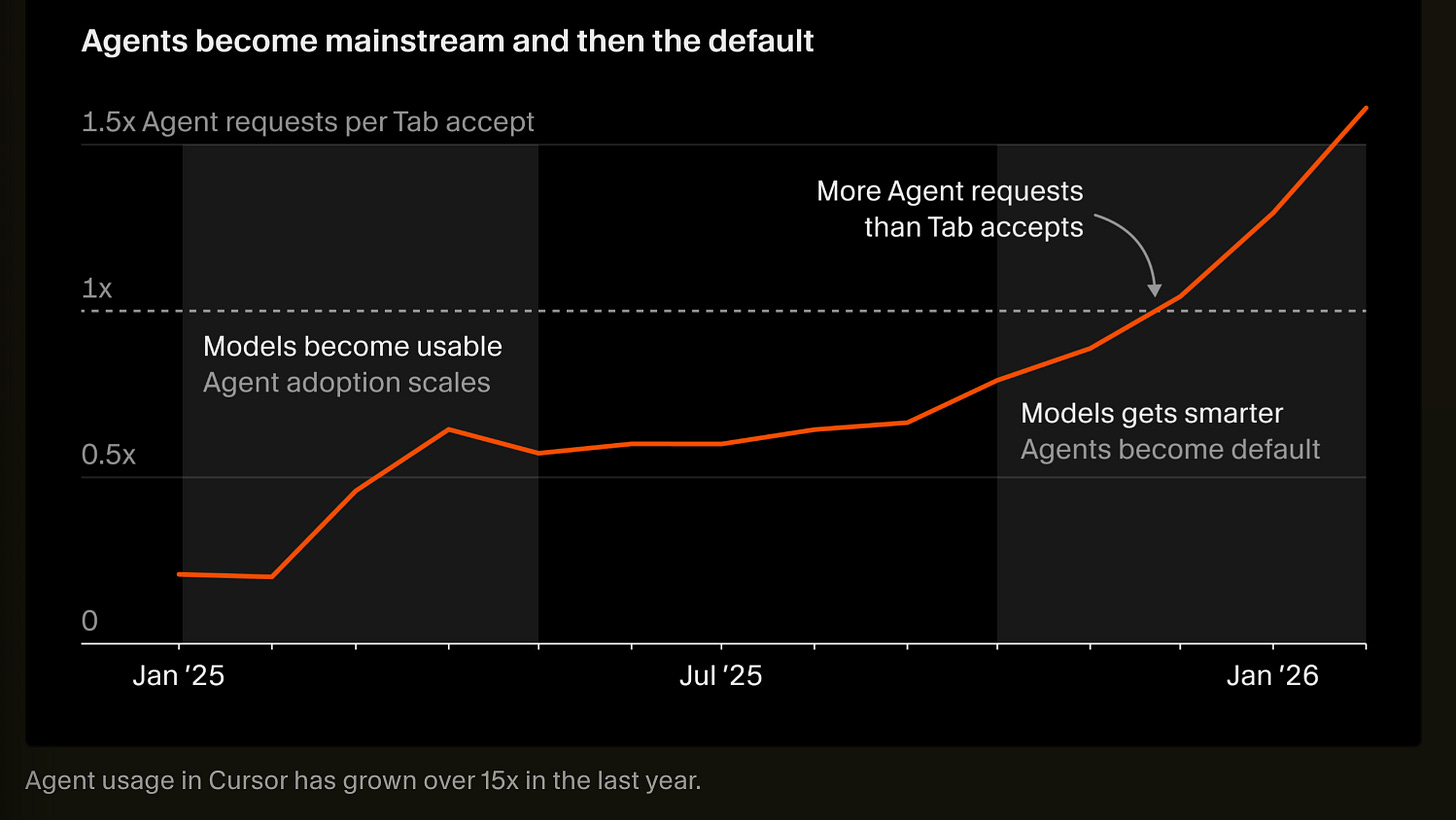
The first wave consisted of developer‑centric tools such as Copilot and Cursor’s tab autocomplete, which still required the developer to manually accept or reject changes. The second wave introduced local agents like Claude Code, Windsurf, and Cursor’s agents pane, allowing multiple terminal sessions to run concurrently. The current wave focuses on async agents that orchestrate end‑to‑end development in the background, freeing developers from the local workflow.
Walden Yan of Cognition demonstrates how background agents can boost PR merge rates from 16 % to 80 % and how open‑source projects like OpenInspect provide a framework for multi‑agent orchestration. The shift moves agents from being a tool inside the IDE to teammates that run on separate machines, handling tasks, repos, shells, tests, and review loops.
Key takeaways include the move from avoiding multi‑agent systems to embracing them, the importance of agent orchestration, and the potential to offload repetitive coding tasks to background agents.
Key changes
- First wave: code tools with autocomplete (Copilot, Cursor tab) still developer‑centric
- Second wave: local agents (Claude Code, Windsurf, Cursor agents pane) enable concurrent terminal sessions
- Current wave: async agents orchestrate end‑to‑end development in background
- Background agents run on separate machines, accepting tasks, repos, shells, tests, and review loops
- Walden Yan’s Cognition demonstrates 7x PR growth from 16 % to 80 % commits
- OpenInspect provides open‑source background‑agent system
- Shift from avoiding multi‑agent systems to embracing them
- Agents now act as teammates, equipping developers with tools and reviewing work