ESMFold 2: Protein Structure Prediction at Scale with BioHub
Experiment with ESMFold 2 for protein design and structure prediction tasks.
Integrate ESMFold 2 into your protein research pipeline and explore its API for structure prediction.
Summary
BioHub’s Alex Rives announced the release of ESMFold 2, an open scientific engine that leverages BERT‑like transformers trained on millions of protein sequences to predict structure, design, and discovery.
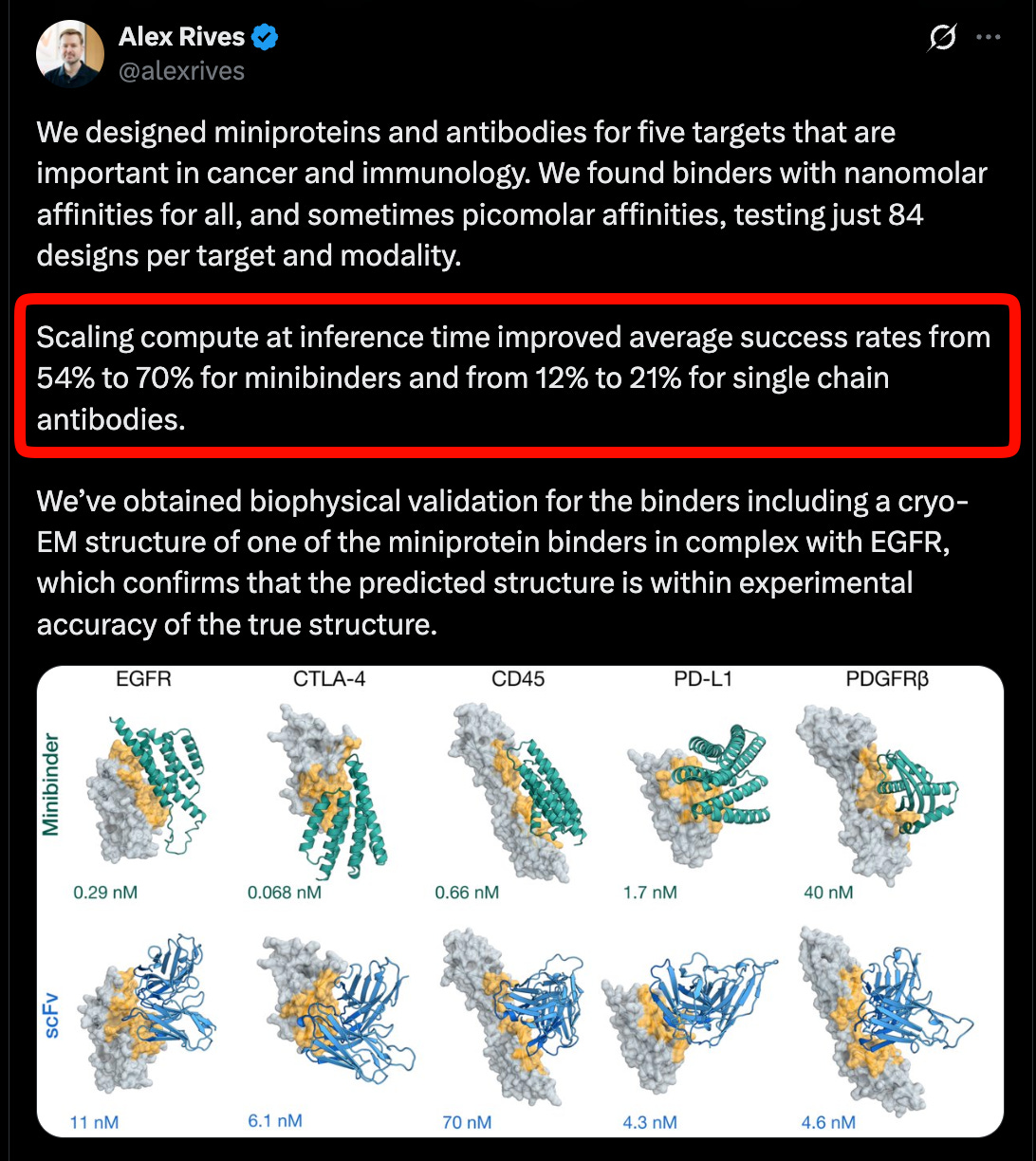
ESMFold 2 achieves state‑of‑the‑art performance on antibody interactions and demonstrates inference‑time scaling across five cancer and immunology targets. The release also includes an atlas of 6.8 billion proteins and 1.1 billion predicted structures, making large‑scale protein data accessible.
The models, ESM2 and ESM3, were trained with a simple next‑token objective but learned biological structure and function, scaling predictably with compute. ESMFold 2 outperforms specialized models like AlphaFold3 on some hard problems, showing that vanilla transformer architectures can compete in protein modeling.
Key takeaways include the open‑source nature of ESMFold 2, its scalability, and its potential to democratize protein structure prediction.
These developments suggest that transformer‑based models will become a standard tool in computational biology.
Key changes
- ESMFold 2 released as open scientific engine for protein biology
- State‑of‑the‑art performance on antibody interactions and cancer/immunology targets
- Inference time scaling works across five targets
- Atlas of 6.8 billion proteins and 1.1 billion predicted structures available
- ESM2 and ESM3 models trained on millions of protein sequences
- ESMFold 2 beats specialized models like AlphaFold3 on some hard problems
- BioHub’s open‑source approach enables community use
- ESMFold 2 supports BERT‑like transformer architecture for protein modeling