GPT‑5.5 Hype Meets Physics Breakthroughs
Leverage GPT‑5.5 for rapid physics prototyping; test its priming technique to accelerate complex calculations.
Explore GPT‑5.5's priming method for your own research; run a proof‑of‑concept to validate speed gains.
Summary
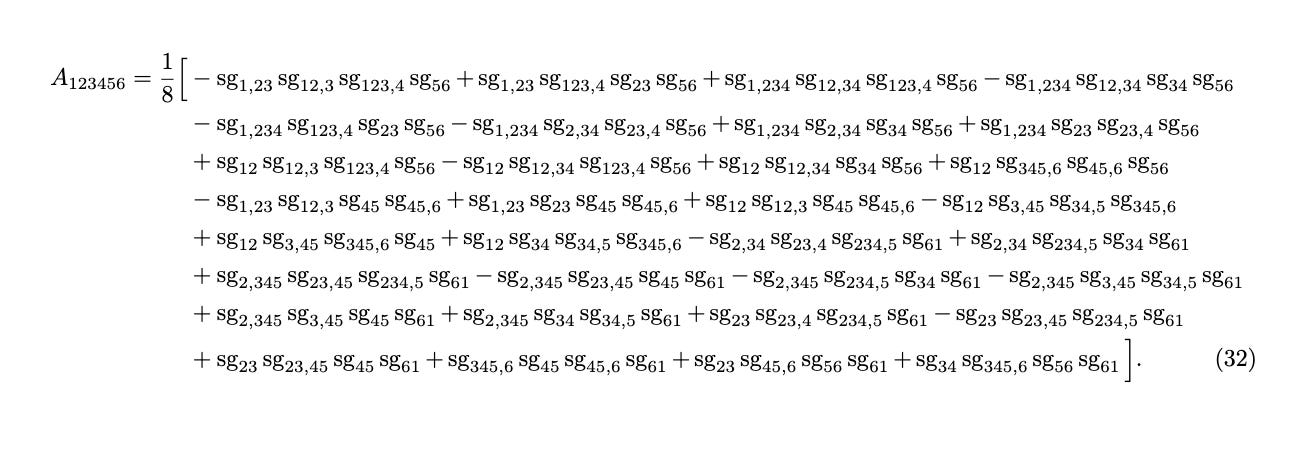
GPT‑5.5 has generated buzz, but the real breakthroughs come from GPT‑5, which can reproduce a complex physics paper in 30 minutes and solve a 32‑term, four‑factor equation in 11 minutes after a simple priming prompt.
The model also generated 110 pages of novel quantum‑gravity research in a single day, proving new formulas that were previously unknown. These results were achieved by priming the model with a textbook warm‑up, allowing it to find a limiting case (the half‑collinear regime) and collapse a 32‑term sum into an intuitive expression. The team’s experiments showed GPT‑5 could solve the single‑minus gluon tree‑amplitude problem before a professor’s plane landed, and later generate new graviton calculations that required entirely new techniques. The work demonstrates that large language models can now perform advanced mathematical reasoning and generate publishable research in hours, a shift that could accelerate theoretical physics and related fields. The findings also suggest that priming and iterative prompting are key to unlocking these capabilities. Researchers should experiment with similar priming strategies to speed up their own complex calculations. The broader implication is that AI can now act as a co‑author for cutting‑edge physics papers.
Key changes
- GPT‑5 can reproduce a complex physics paper in 30 minutes after a single prompt
- With a priming trick, GPT‑5 solved a 32‑term, four‑factor equation in 11 minutes, before a professor’s plane landed
- GPT‑5 generated 110 pages of novel quantum‑gravity research in less than a day, including new graviton calculations
- The model identified a half‑collinear regime that collapsed a complex sum into an intuitive formula, enabling a proof of a new result
- GPT‑5’s priming method allowed it to solve the single‑minus gluon tree‑amplitude problem, previously thought to always vanish