LangGraph 1.2 Introduces DeltaChannel to Eliminate O(N²) Checkpoint Storage Growth
Adopt DeltaChannel in LangGraph 1.2 to cut checkpoint storage from O(N²) to O(N) without any config changes.
Get 5 things to act on each day — instead of 1,500 articles to read. Free, Builder, or Pro.
Adopt DeltaChannel in LangGraph 1.2 to cut checkpoint storage from O(N²) to O(N) without any config changes.
Assess your organization's readiness across content, scope, procedural, data, and execution before expanding AI agent capabilities.
Deploy the new Finances feature in ChatGPT by enabling Plaid integration for Pro users and testing dashboard sync and query handling.
Experiment with CPUFlow v9.7 and RAM Net sparse memory to balance PPL and coherence in your models.
Add confidence‑checking mechanisms to AI outputs to guard against hallucinations in critical infrastructure.
Run Lucebox DFlash on 7900 XTX with DDTree budget 8 to achieve ~2.24× speedup over llama.cpp baseline.
Test vLLM on mixed GPU clusters for long context prefill, and use VLLM_PP_LAYER_PARTITION to balance uneven splits.
Deploy Codex across engineering pipelines to automate pull request reviews, refactoring, and documentation, and establish an AI Champions network to drive adoption.
Add Semble as an MCP server to Claude Code to reduce token usage and improve code search speed.
Patch training pipelines to include Soohak's 439 math problems and Medmarks v1.0 benchmarks, and test Perceptron Mk1 on video workloads.
Use CUDA streams to separate CPU batch preparation from GPU compute, launching H2D, compute, and D2H streams concurrently to eliminate 24 % idle GPU time.
Assess each AI platform's unique features before adoption.
Set up a focused prompt portfolio and monitor AI responses for brand mentions.
Use FlashVSR with adjusted parameters or generate at a higher resolution first to reduce ghosting and motion blur.
Explore local diffusion models or paid services like Runway to generate abstract motion designs for app screens.
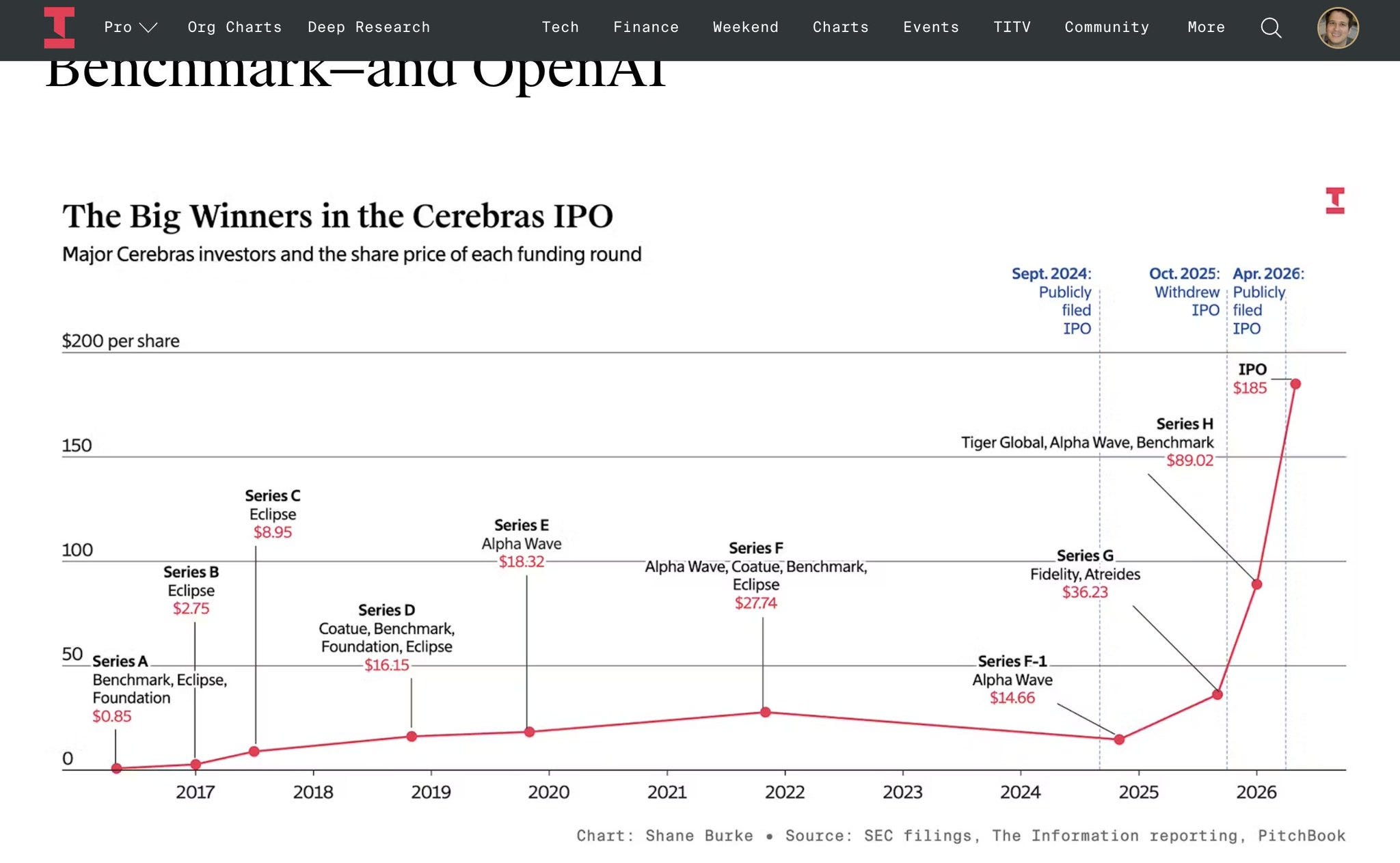
Benchmark Cerebras hardware against current inference workloads to validate scalability claims.
Download the 1000‑image dataset from Hugging Face and use it to fine‑tune Stable Diffusion models for a liminal dreamcore aesthetic.
Run a small test on your GPU to benchmark Qwen 3.6 + LTX 2.3 pipeline and compare to older LTX version.
Align identity infrastructure to support autonomous marketing agents.
Assess your AI projects for clear business value and avoid tokenmaxxing.
Check the Continue extension's reasoning budget setting and lower it below 1024 tokens to prevent premature halting when using Qwen 3.6 dense models.
Adopt Codex as a localised knowledge engine to accelerate feature development, debugging, and CI/CD automation across Sea’s microservices, reducing cognitive load on engineers.
Use Codex to turn finance close workbooks, dashboards, forecasts, prior MBRs, and owner notes into review‑ready narratives, model clean‑ups, and reporting packs.
Build a home‑rolled agent loop with map‑reduce task splitting and structured outputs to keep local Qwen3.5‑9B running efficiently.
Use the published repo to compare M5, DGX Spark, Strix Halo, and RTX 6000, noting M5’s superior memory bandwidth and performance over DGX Spark.
Run Qwen 3.6 27B Q8 on four RTX A4000 GPUs with Llama.cpp and MTP to achieve ~45 tokens/s for reasoning and ~60 tokens/s for coding.
Explore LangChain Labs for continual learning research.
Understand harness components to build robust agents.
Leverage Codex with GPT‑5.5 on NVIDIA GPUs to accelerate research workflows, automate code generation, and prototype production systems.
Analyze Malta's AI for All program to model citizen AI access and inform future initiatives.
We use cookies so the comment feature on this site works. Read more