Good to know
Pixel‑Pets: AI‑Generated C++ Code for IoT Pet Devices
Patch your IoT projects to use AI‑generated C++ code for device logic and stable refactoring.
affects:
internal
Get 5 things to act on each day — instead of 1,500 articles to read. Free, Builder, or Pro.
Patch your IoT projects to use AI‑generated C++ code for device logic and stable refactoring.

Use Installerpedia to install repositories quickly.

Implement a review workflow for AI-generated captions to avoid overconfidence.

Use IQ4_XS quantization for Qwen 3.6 27B on 16 GB GPUs, enabling turboquant with -ngl 99 to reach 760 tps pp and 22 tps tg.
Install macsh from the DMG, run `xattr -dr com.apple.quarantine /Applications/macsh.app`, and use it to mount SFTP, S3, or FTP servers via Finder without kernel extensions.
Add the I‑Nano tier to your quantization scripts, update model references to the new 30+ MoE list, and run long‑context tests on your 30‑50B models.
Check the bus factor table to spot projects with a single contributor and high commit counts, then decide whether to contribute or fork.

Patch your deployment to enable CORS between Netlify and Hugging Face Spaces, monitor token limits, and add error handling for ambiguous symptom cases.

Document the benchmark results and share with the team.
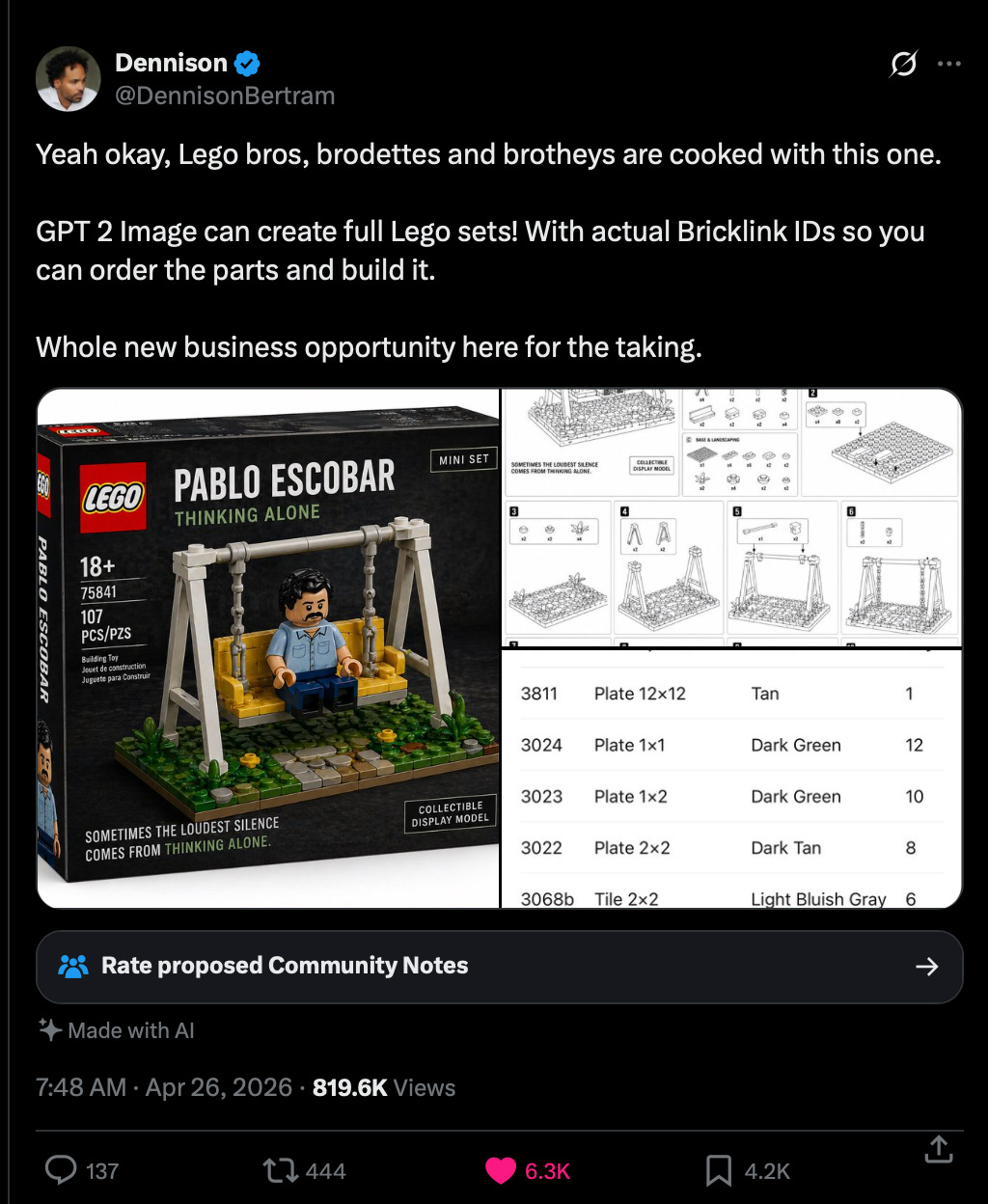
Integrate GPT‑Image‑2 into Codex to generate assets on‑the‑fly during coding sessions.
Check the new file‑based YAML agent workflow for integration.
Enable /goal in Codex CLI to loop until goal met or token budget exhausted.
Benchmark Flink 1.19 shows 1.82 M events/sec for 10‑second tumbling windows, outperforming Kafka Streams 3.8 and Spark 4.0 by 3.2×; consider using Flink for high‑throughput pipelines.

Run the provided evaluation suite on your local environment to assess Qwen model performance for your coding workflow.
Explore VerseDB as a unified multi-model engine that supports SQL, JSON, vectors, graph, realtime, and offline sync, with embedded-first design and AI-ready features.
Test the new turboquant options for Qwen 3.6 by running vllm with --kv-cache-dtype turboquant_4bit_nc and verify inference.

Patch your workflow by structuring prompts, maintaining CONTEXT.md and ADR docs, and using Claude Code to generate code without opening files.
Patch your LLM strategy by using local 7B models for code completion, Gemini API for complex reasoning, and a hybrid approach based on task type.

Patch your debugging process by integrating JS Trace Table into your workflow to step through code and inspect variable changes in real time.
Train a 9B model with a reverse LLM sidecar to improve syntax accuracy and run full HumanEval.
Run Llama405b q4 on AMD Epyc 9374f to achieve 1.2k tokens/sec, while newer models reach 30‑100k tokens/sec.
AMD Ryzen AI Max PRO 495 leaks suggest a 192GB VRAM APU, potentially 256GB in 2027, useful for local AI workloads.

Test Walkyrie‑1.3B‑v1.0 to gauge image quality and anatomy accuracy.

Benchmark Qwen‑Image, ERNIE, and FLUX.2 Dev on RTX 5090 to choose fastest model.

Compare LCIET and Klein 9B for prompt adherence versus aesthetic quality.

Deploy Ace‑Step‑1.5 API server UI to add text‑to‑music generation to your workflow.
Build system prompts in the target language to avoid inconsistent responses from Gemini.

Adjust Platformer’s content schedule to prioritize quality over fixed cadence, and remove Side Quests column.

Use propensity score methods—IPW and nearest‑neighbor matching—to correct for opt‑in bias when evaluating AI feature lift, and implement the pipeline on your user data.

Deploy a Scikit‑learn spam classifier to AWS Lambda by packaging scikit‑learn in a Lambda layer, uploading model artifacts to S3, and exposing the function via API Gateway.