DigitalOcean Launches Batch Inference for Cost‑Efficient AI Workloads
Submit up to 50 000 OpenAI or 100 000 Anthropic requests via a single .jsonl file to DigitalOcean Batch Inference, cutting costs by up to 50 % and avoiding rate limits.
Get 5 things to act on each day — instead of 1,500 articles to read. Free, Builder, or Pro.
Submit up to 50 000 OpenAI or 100 000 Anthropic requests via a single .jsonl file to DigitalOcean Batch Inference, cutting costs by up to 50 % and avoiding rate limits.
Build a unified data platform with Trino, R2, and Cloudflare Access to provide single SQL access across all data, with governance via Lifeguard and Skimmer.
Monitor Moltbook for bot‑generated content that could affect search rankings.
Integrate LMS custom nodes into ComfyUI, test token limits, and monitor memory usage to prevent collapse.
Adjust CFG settings and test prompt length; join the ComfyUI Discord for community support.
Use the Anima 1.0 Base workflow with turbo LoRA and the sweat‑skin patch to generate fast, high‑quality images while applying negative weights for prompt adherence.
Reproduce the Italy 1980s video by following the shared Z‑Image Turbo 2.2 workflow; the result demonstrates the model’s ability to generate contextualized historical scenes.
Document the claim and harness details in evaluation reports to ensure validity and reproducibility.
Test the Qwen3.6 27B fine‑tuned model, which reaches 75 % human alignment, against your own evaluation suite.
Examine the article’s analysis of AI‑driven labor displacement and its implications for client workforce strategies.
Track OpenAI’s IPO filing and evaluate agent‑centric model strategies to stay competitive; consider integrating harness‑based approaches like DeepSeek’s new team.
Review the report to understand AI exposure distribution and map high-risk users.
Patch your inference pipelines to accommodate ZCube’s flattened bipartite topology and monitor latency reductions of up to 40.6% on first token.
Explore Mistral's on‑prem stack and evaluate Vibe for Work for enterprise agentic needs.
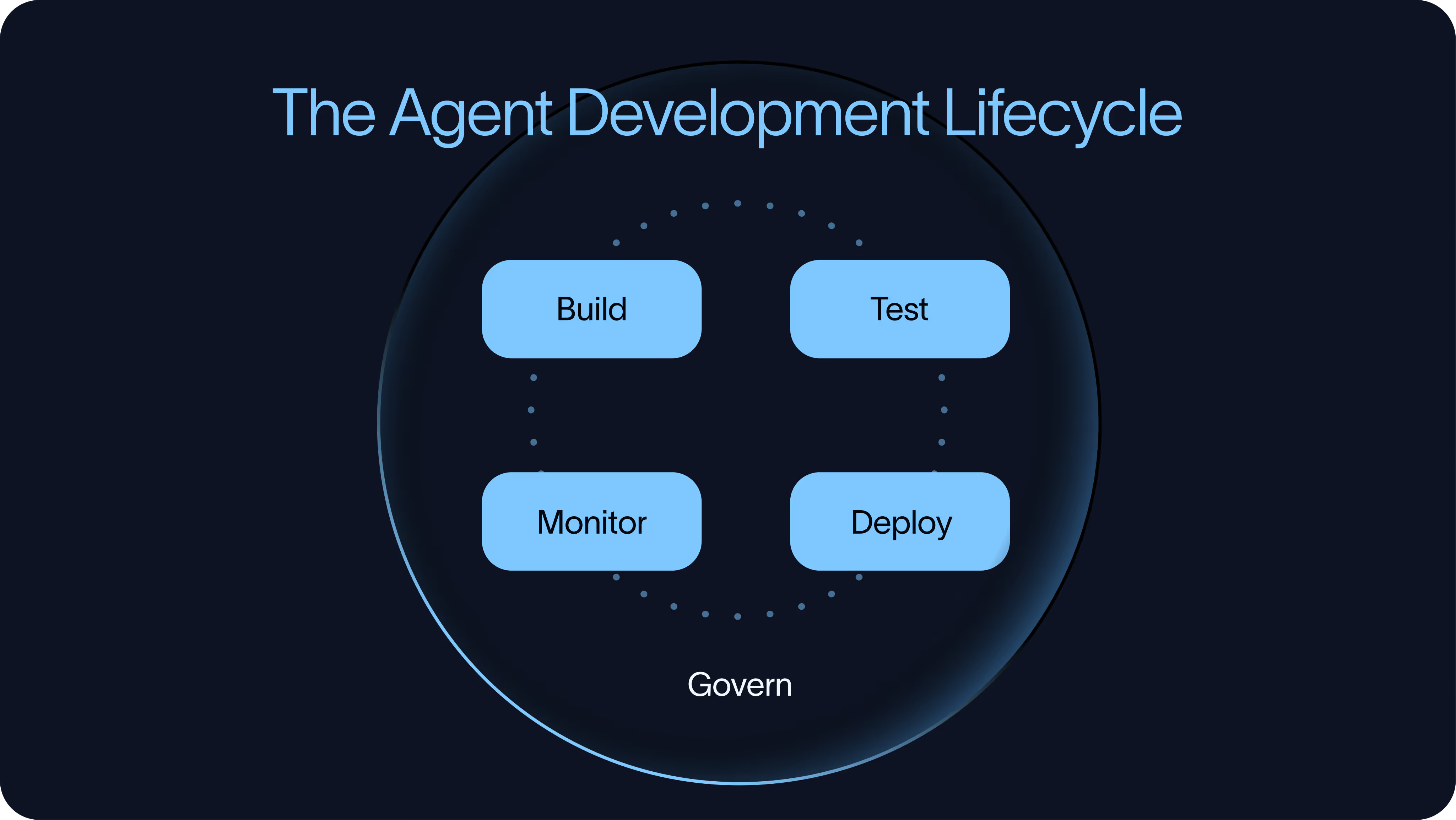
Implement a Build → Test → Deploy → Monitor cycle for agents, starting evaluation before production and using LangSmith for tracing and sandboxing.
Review: Map your current agent architecture to harness, scaffold, and sub‑agent definitions to ensure clear separation.
Deploy: Run speech‑to‑speech locally with llama.cpp Gemma 4 and connect Reachy Mini to the local backend.
Benchmark MTP on vLLM and llama.cpp to find the optimal speculative token count per model and measure speedups.
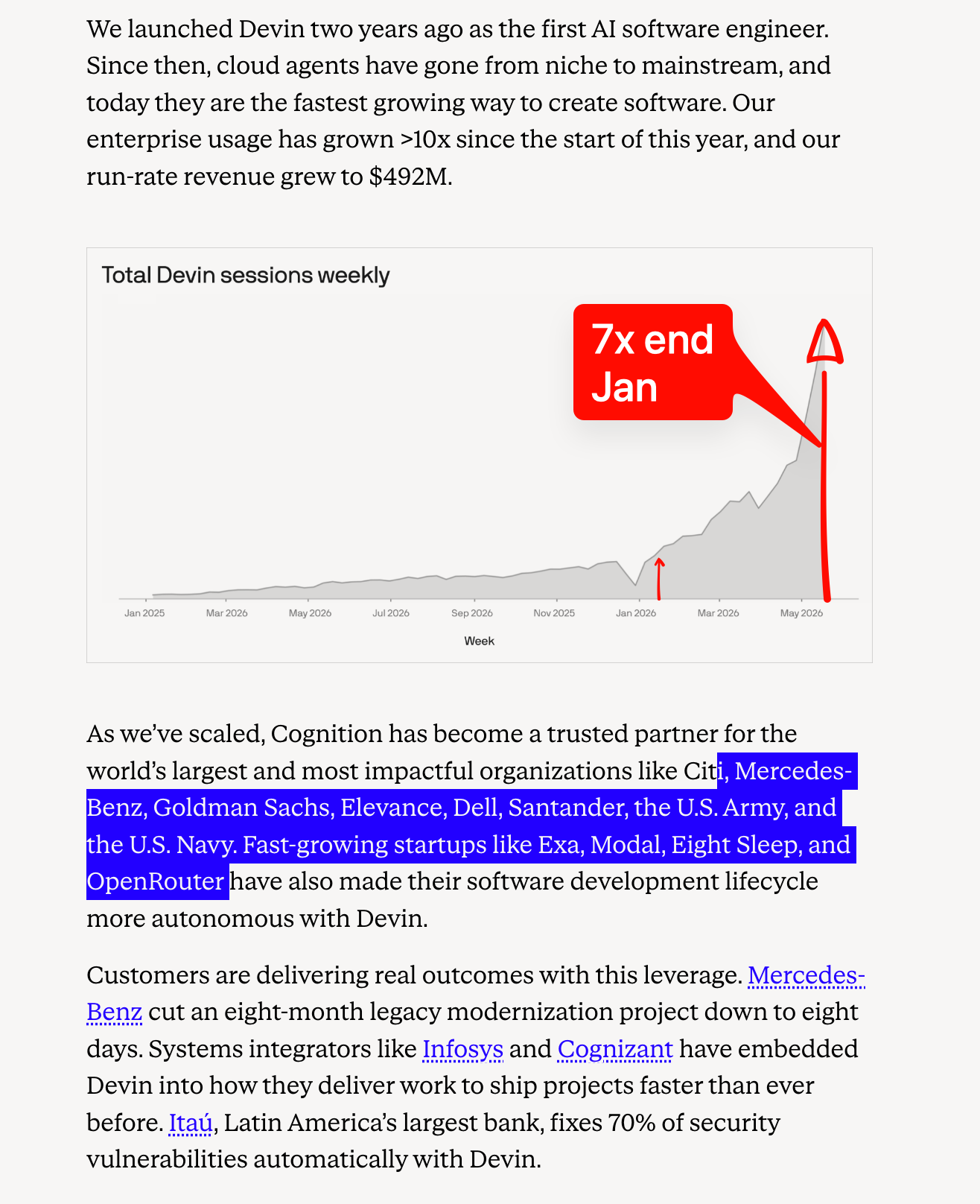
Review Cognition's Series C funding and ARR growth to gauge market trends.
Benchmark vector search libraries by running the provided scripts on your dataset sizes to identify the fastest and most memory‑efficient option.
Apply friction to agentic sessions: write initial code, then review, ask questions, etc.
Implement an AI tool governance policy and conduct risk assessments for all AI tools used by employees.
Test the train-a-model-from-scratch repo on an 8GB GPU to build a 25M TinyStories model; compare performance with mHC, BitNet, TurboQuant, and MTP.
Enable C2PA metadata and SynthID watermarking on OpenAI-generated images to provide durable provenance signals.
Run your agent through the Open Agent Leaderboard using Exgentic to benchmark quality and cost across six diverse tasks.
Implement LangSmith Engine for agent CI/CD, enable Claude Code Fast mode with Opus 4.7, and integrate Cognition’s Devin Auto‑Triage into your bug‑triage pipeline.
Explore OpenAI's Education for Countries program to gauge its impact on educational AI deployment.
Deploy Hy‑MT2 models for high‑quality multilingual translation and leverage AngelSlim quantization for efficient on‑device inference.
Install the ComfyUI plugin from GitHub, test workflow loading, and contribute bug fixes or security reviews.
Deploy Runtime to enable agent-based CI/CD.
We use cookies so the comment feature on this site works. Read more