Observability & Evals Agent Architecture Evaluating Skills The LangChain Team
Run Claude Code in a clean Docker environment, define constrained tasks, and compare skill usage to measure performance gains.
Get 5 things to act on each day — instead of 1,500 articles to read. Free, Builder, or Pro.
Run Claude Code in a clean Docker environment, define constrained tasks, and compare skill usage to measure performance gains.
Use the five Nylas CLI tools—email send, email list, calendar events list, contacts search, and agent account create—to give AI agents controlled email and calendar access. Configure NYLAS_MCP_TOOLS to expose only these tools.
Enable OpenTelemetry in your LangChain app by installing the otel extras and setting LANGSMITH_OTEL_ENABLED=true.
Understand that building AI is easy, but orchestrating infrastructure takes 6‑8 months and a 1000 ms latency budget.
Use Celery with Redis for async cross‑cloud task delegation.
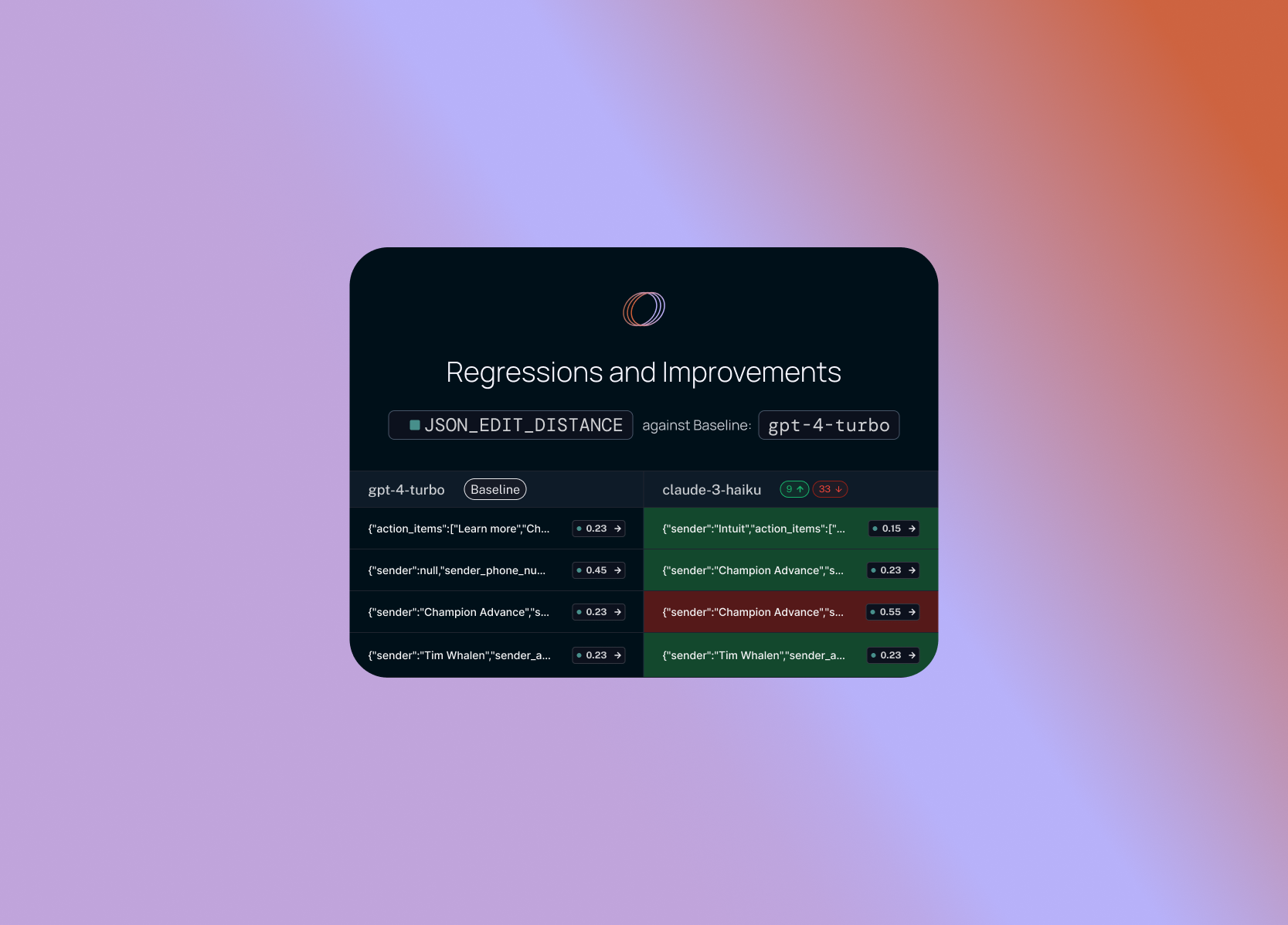
Use LangSmith Comparison View to compare multiple runs.
Implement evaluation driven development using LangSmith for Dosu.
Build a connector bot by integrating Airbyte, Pinecone, and LangChain.
Evaluation costs for agent benchmarks can reach tens of thousands of dollars; use coarse‑to‑fine strategies like Flash‑HELM or anchor‑point subsampling to cut compute by 100×–200× while preserving ranking.
Release AP2 v0.2 from GitHub, adopt Human Not Present payments, and integrate Verifiable Intent to enable autonomous agent transactions.
Run gpt‑5.2‑codex on Terminal‑Bench 2.0 to confirm the 66.5 % score and benchmark TSP on 1024 MI300X GPUs for 173 M tok/sec.
Automate citation outreach and content refresh using AI agents, following the framework presented in the Writesonic webinar.
Review Bun integration with Claude Code to avoid billing surprises.
Build your first Go binary by running `go build hello.go` and execute the resulting executable to confirm output.
Build your own PostgreSQL static analysis by cloning https://github.com/ValkDB/postgresparser and integrating it into your Go tooling.
Check Heretic 1.3's reproducibility and benchmarking features.
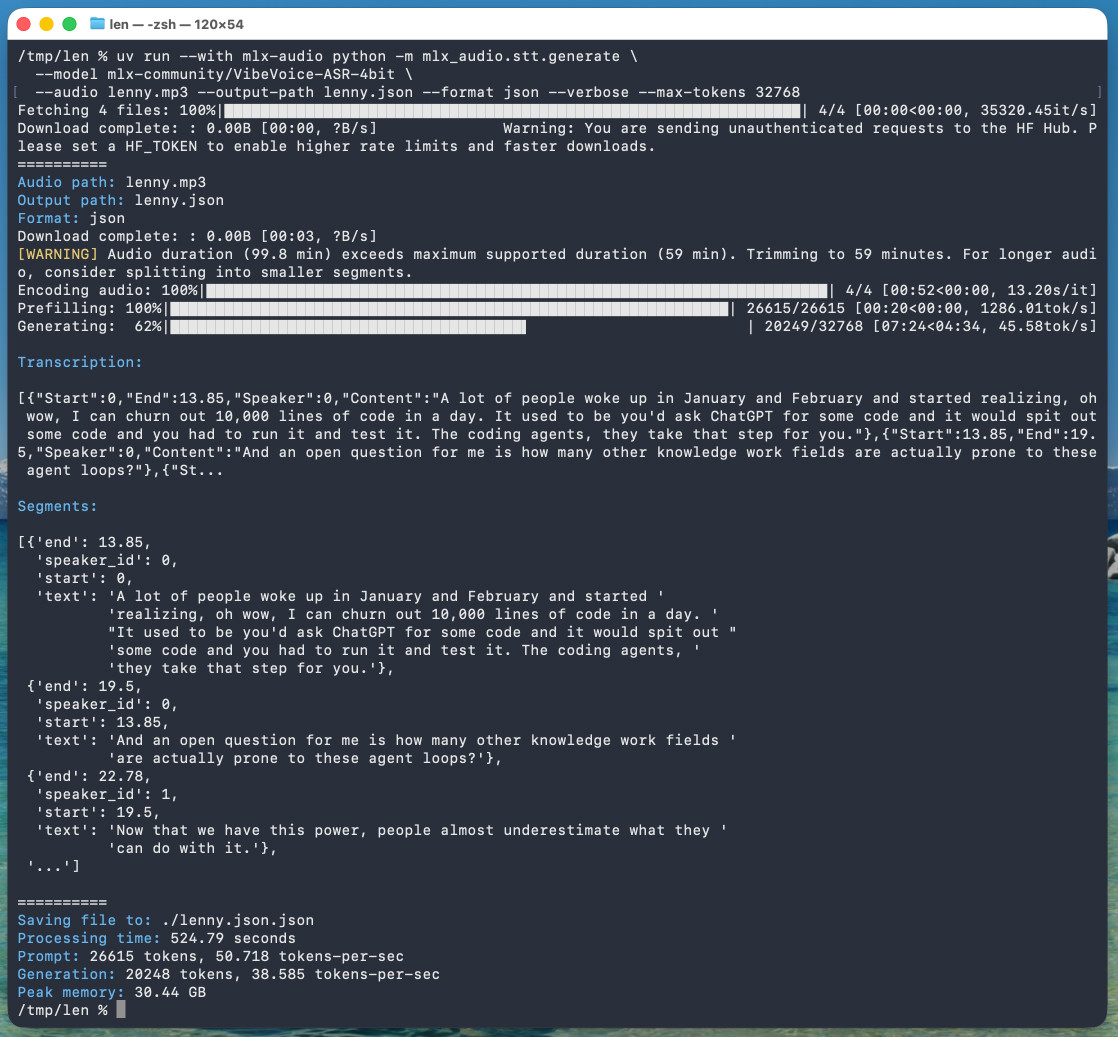
Run VibeVoice via uv and mlx‑audio, use --max‑tokens to extend beyond 25 minutes and handle up to 1 hour of audio.
Build Flidget to detect early churn signals and capture intent in real time.
Test Burnless in your multi‑turn agent workflows to cut token costs.
Patch: integrate Synthadoc v0.3.0 into your knowledge base pipeline to ingest YouTube videos and web search results with timestamped transcripts and cross‑references.
Run Qwen3.6‑27B‑FP8 on a 48‑GB GPU using vLLM 0.20.1 and CUDA 12.9 to achieve ~80 TPS with BF16 KV cache and Blackwell FP8 acceleration.
Configure a manual prompt chain by sending the prompt to Claude, copying the response, pasting into Gemini, then GPT, then Grok, and finally reviewing the output.
Patch your scraping pipeline to replace custom parsers with a call to DivParser /v1/parse, passing your HTML and desired schema.
Add ExportAsync and ImportAsync to your BlazorMemory service and expose the MemoryPanel component with AllowExport/AllowImport parameters.
Patch: Add `cdk --unstable=diagnose diagnose MyStack` to your CI pipeline to automatically retrieve construct path, error, and source location after a deployment failure.
Patch your API marketplace to integrate Apives AI for conversational, JSON‑based endpoint queries.
Implement MCP servers to reduce N×M integrations.
Explore the multi‑agent workflow for CDK contributions.
Run `npm install -g @oh-my-kimi/cli`, then `omk init` and `omk run` to launch a parallel coding team; use `omk chat` for interactive sessions and `omk cockpit` for real‑time monitoring.
Explore how AI agents can automate finance workflows in your organization.
We use cookies so the comment feature on this site works. Read more