Large Language Models Are Overkill For Some Marketing Tasks. Enter The Small Language Model
Evaluate small language models for cost‑effective marketing content generation.
Get 5 things to act on each day — instead of 1,500 articles to read. Free, Builder, or Pro.
Evaluate small language models for cost‑effective marketing content generation.
Create an OKF bundle with markdown files, YAML frontmatter (type, title, description, resource, tags, timestamp), and publish it as a tarball or Git repo to make content machine‑readable for AI agents.
Remove hidden instructions from AI‑enabled buttons and audit assistant memory for unauthorized vendor preferences.
Deploy the GR00T policy as a Ray Serve deployment, then launch Isaac Lab simulators as Ray tasks to achieve closed‑loop, GPU‑isolated evaluation across a cluster.
Add instrumentation to each agent loop level with LangChain primitives to monitor token usage, latency, and tool calls, and stack additional loops for intent and safety checks.
Identify legacy infrastructure that can hijack AI agents to avoid security blind spots.
Implement a backtrack sampler with a verifier to reduce hallucinations, noting doubled VRAM and compute.
Try Lingochunk to create Anki cards from audio.
Download the open dataset to analyze bias in your own models.
Patch your agent design to keep full context.
Test your ASR models on the FFASR Leaderboard to quantify far‑field WER and latency trade‑offs.
Integrate ChatGPT with your transportation inventory to enable conversational booking and adopt Codex for internal development workflows.
Implement ChatGPT Enterprise and Codex in your teams, ensuring compliance with your security policies.
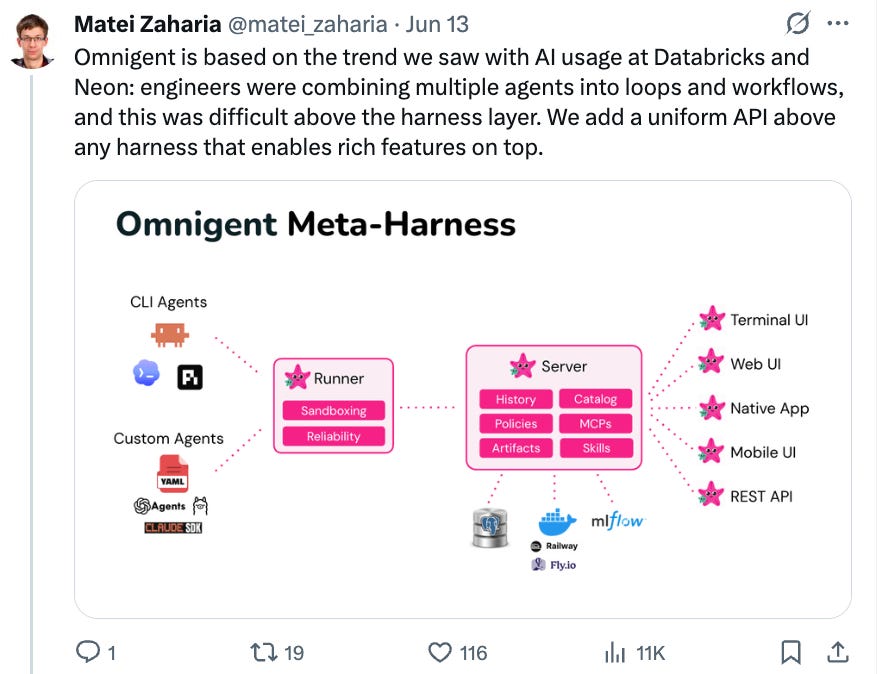
Integrate Omnigent into your agent stack to standardize session APIs and enforce spend controls.
Run your own benchmarks to decide whether to use MTP for your workloads; consider disabling MTP if quality suffers.
Set up llama.cpp with the given flags to test GLM‑5.2‑UD‑Q5_K_S on dual RTX 5090 for ~12 t/s.
Run LFM2.5 230M in‑browser using the provided WebGPU kernels to evaluate performance.
Document your current agent setup and share details for community feedback.
Implement Hybrid ClojureScript to embed visual syntax in code and leverage mini‑GUIs in IDEs.
Explore Codex persistent workspace strategies to maintain context across long projects.
Use MCP as an auth gateway to separate authentication from LLM agent context.
Enforce stricter access controls for AI tools and update usage policies to prevent shadow AI incidents.
Assess your property data for AI compatibility and integrate Stripe Data Pipeline to unify payments and booking data, ensuring friction‑free checkout and fraud protection.
Benchmark your models on RTX 6000 PRO using the provided GitHub results and adjust quantization to 4‑bit for best performance.
Review Heretic’s alignment documentation to ensure compliance with court requirements.
Explore Besimple AI’s platform to identify gaps and propose product improvements.
Consider exploring alternative GPU stacks like ROCm or Intel for AI workloads to reduce costs, but note current lack of maturity compared to NVIDIA.
Patch your inference stack to use Perplexity Unigram tokenizer and DeepSeek V4‑Pro attention for lower cost, and integrate LangChain Deep Agents v0.6 to shrink checkpoint size.
Prioritize harness engineering and agent orchestration to align benchmarks with real developer experience.
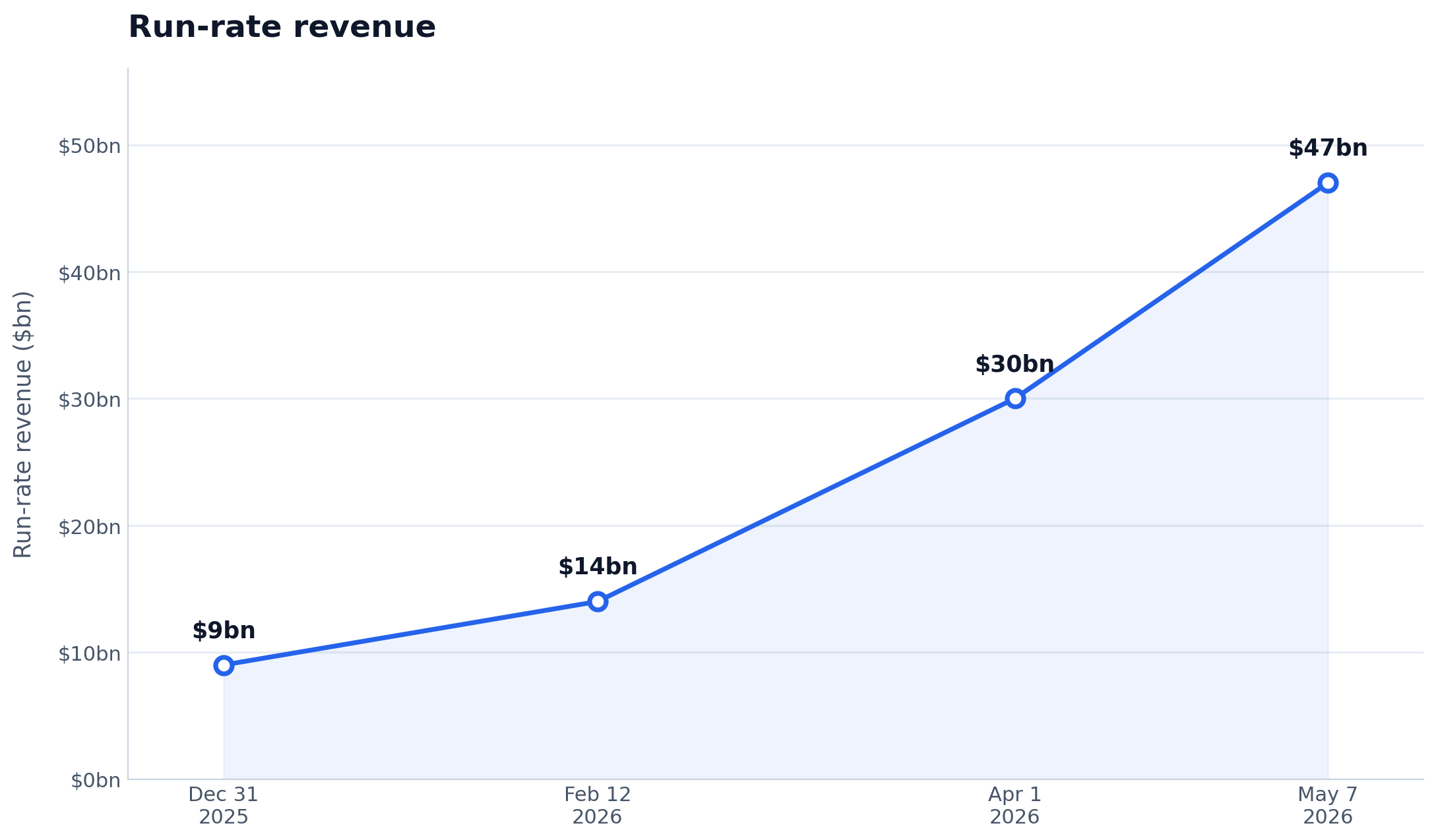
Monitor Anthropic's revenue trajectory; no immediate action required.
We use cookies so the comment feature on this site works. Read more